



Bond Cleaning Vs. Routine Housekeeping: Know The Difference
Do you think that your regular weekend cleaning routine is enough to pass a rental inspection? Think again because bond cleaning plays by a completely different rulebook. What may seem “clean enough” in your daily life usually falls short, when landlords or property managers conduct a final inspection.
Moving out of a rental property comes with a long checklist, and cleaning often tops that list. However, many tenants assume that their regular cleaning habits are enough to secure their bond refund. This article will explain the difference between bond cleaning and routine housekeeping. Understanding the difference, especially when it comes to top quality bond cleaning Sunshine Coast, can help you avoid costly mistakes and ensure a smooth move out process.
- What is Routine Housekeeping?
- What is Bond Cleaning?
- Key Differences Between Bond Cleaning and Routine Cleaning
- Areas Covered in Bond Cleaning
- Time, Effort and Expertise Involved in Cleaning
- Cleaning Products and Equipment Used
- Why Choosing the Right Cleaning Matters
- Infographic: Difference Between Regular Cleaning & Bond Cleaning
- Wrapping Up
1. What is Routine Housekeeping?
Routine housekeeping refers to the regular cleaning tasks you perform to maintain a clean and comfortable living environment. These tasks are designed to keep your home organised and hygienic on a day to day basis without requiring too much time or effort.
It typically includes sweeping, mopping, doing laundry, washing dishes, and wiping commonly used surfaces. While it ensures your home looks neat and presentable; it primarily focuses on visible cleanliness rather than deep sanitation or detailed cleaning of hidden areas.
2. What is Bond Cleaning?

Bond cleaning, also known as end of lease cleaning, is a deep and comprehensive cleaning process carried out when tenants vacate a rental property. Its purpose is to return the property to the same condition it was in at the start of the lease, as outlined in the rental agreement.
This type of cleaning is far more detailed and intensive than routine housekeeping. It includes everything from deep cleaning carpets and scrubbing walls to sanitising kitchens and bathrooms thoroughly. Many tenants rely on professional bond cleaning Sunshine Coast services to meet these strict requirements and avoid bond deductions.
3. Key Differences Between Bond Cleaning and Routine Cleaning
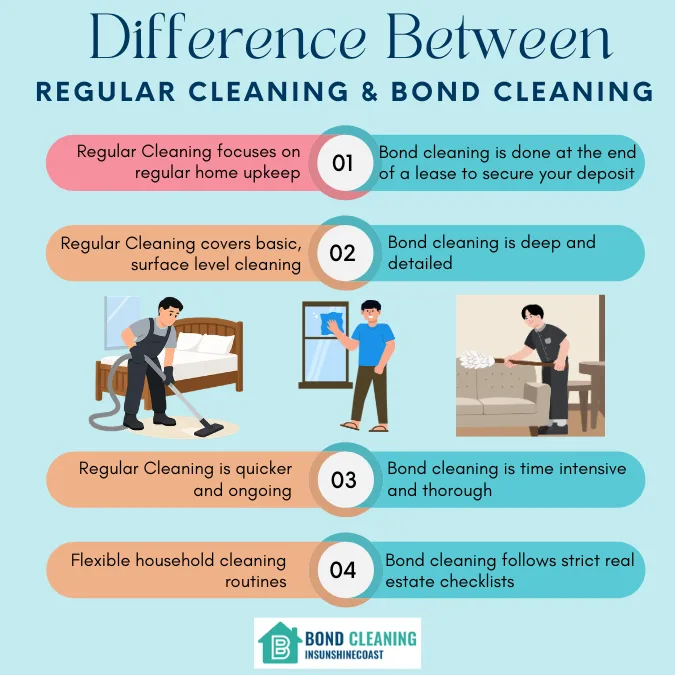
The primary difference between routine housekeeping and bond cleaning lies in their purpose and depth. Routine cleaning is performed regularly to maintain a clean living environment whereas bond cleaning is a one time, detailed process aimed at meeting landlord expectations.
Another key difference is the level of detail involved. Routine cleaning usually skips areas that aren’t visibly dirty while bond cleaning focuses on every corner including hidden and hard to reach spaces. This makes bond cleaning significantly more thorough and essential when moving out.
4. Areas Covered in Bond Cleaning
Bond cleaning includes areas that are often neglected during regular cleaning routines. While you may clean surfaces and floors frequently, areas like inside cabinets, behind appliances and window tracks are usually overlooked in everyday housekeeping.
Additionally, bond cleaning involves tackling stubborn grime, grease, and stains that accumulate over time. This includes deep cleaning ovens, removing mould from bathrooms and scrubbing skirting boards. These detailed tasks are crucial for passing inspections and are often best handled by professionals offering bond cleaning services.
5. Time, Effort and Expertise Involved in Cleaning
Routine housekeeping is generally quick and manageable, often completed within a short time frame using basic cleaning tools. It doesn’t require specialised skills, making it easy to incorporate into daily or weekly routines.
On the other hand, bond cleaning demands significant time, effort, and expertise. It may take several hours or even days, depending on the property size. The process also requires specialised equipment and cleaning agents to achieve professional level results, which is why many tenants prefer outsourcing this task.
6. Cleaning Products and Equipment Used
Another key difference between bond cleaning and routine housekeeping lies in the type of cleaning products and equipment used. Routine cleaning usually involves basic supplies like surface sprays, mops and cloths that are suitable for everyday maintenance. These tools are effective for light cleaning but may not be strong enough to tackle built up grime or stubborn stains.
Bond cleaning, however, often requires specialised products and equipment designed for deep cleaning. This can include heavy duty degreasers, carpet steam cleaners, and mould removal solutions that go beyond standard household supplies. Many professional bond cleaning Sunshine Coast services use industry grade tools to deliver a level of cleanliness that meets strict inspection standards.
7. Why Choosing the Right Cleaning Matters
Choosing the right type of cleaning is crucial, especially when you’re nearing the end of your lease. While routine cleaning helps maintain your home; it doesn’t meet the strict criteria required during final inspections by landlords or property managers.
Failing to meet bond cleaning standards can lead to deductions from your security deposit. Investing in proper bond cleaning makes sure that every detail is taken care of; giving you peace of mind and increasing the chances of receiving your full bond refund.
Infographic: Difference Between Regular Cleaning & Bond Cleaning
Wrapping Up
Routine housekeeping and bond cleaning may seem similar at first glance, but they serve entirely different purposes. One is about maintaining cleanliness for daily living, while the other is about meeting strict end of lease standards. Understanding this difference can save you from unnecessary stress and financial loss. Whether you choose to handle it yourself or hire professionals, ensuring a thorough bond clean is key to a smooth and hassle free move out experience.