


How To Encourage Kids To Clean Their Room Without Nagging?
Teaching kids to clean their room today can save you a lot of stress tomorrow. What may seem like a small daily habit actually builds a strong sense of responsibility, independence and discipline in children. Instead of constantly reminding them to tidy up, the goal is to help them understand why keeping their space clean matters and how it benefits them in the long run.
However, getting kids to clean their room without nagging can feel like a challenge. The key lies in changing your approach by making cleaning feel less like a forced task and more like a natural part of the routine. This article will guide you on how to motivate kids to clean their room. Whether it is everyday tidying or preparing for something more detailed like guaranteed bond cleaning Sunshine Coast; encouraging the right habits early can make the process smoother for both parents and kids.
- Make Room Cleaning Fun Instead of Forcing It
- Break Down “Clean Your Room” into Easy Tasks
- Build a Consistent Room Cleaning Routine
- Model the Habit of Keeping Spaces Clean
- Use Positive Reinforcement to Encourage Cleaning
- Give Kids Ownership of Their Room’s Cleanliness
- Set Age Appropriate Room Cleaning Expectations
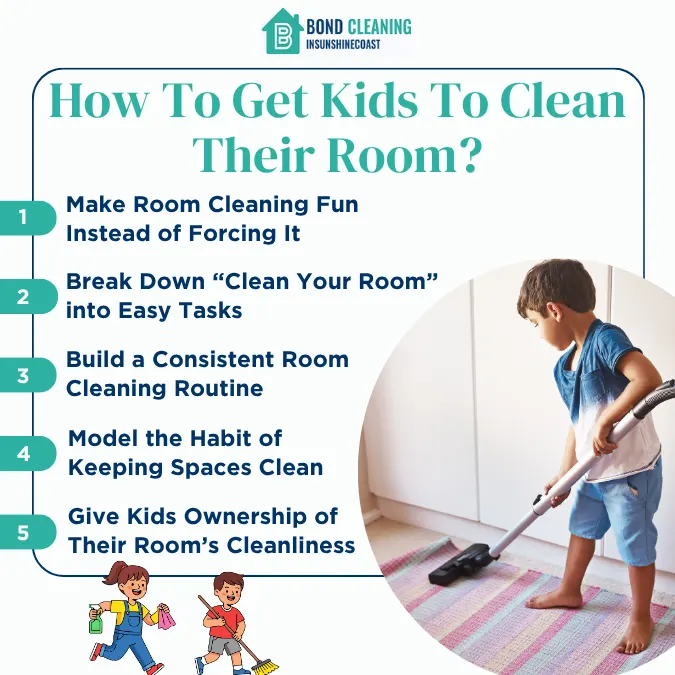
- Infographic: How To Get Kids To Clean Their Room?
- Wrapping Up
1. Make Room Cleaning Fun Instead of Forcing It
Kids are naturally drawn to play, so turning cleaning into a game can completely change their attitude towards it. You can set a timer and challenge them to “beat the clock” or create a fun playlist and turn tidying up into a mini dance party. The more engaging the activity feels, the less it feels like a chore.
Another idea is to create small competitions especially if you have more than one child. Who can pick up the most toys in five minutes? Who can organise their bookshelf the fastest? These little challenges build excitement and make cleaning something they look forward to rather than avoid.
2. Break Down “Clean Your Room” into Easy Tasks
Children often resist cleaning, because the task feels overwhelming or unclear. Instead of saying “clean your room,” break it down into smaller, manageable steps. For example, ask them to start with picking up toys then move on to arranging books and finally making the bed.
When expectations are simple and specific, kids are more likely to follow through. You can even create a visual checklist for younger children. This not only helps them stay on track but also gives them a sense of accomplishment as they tick off each task.
3. Build a Consistent Room Cleaning Routine
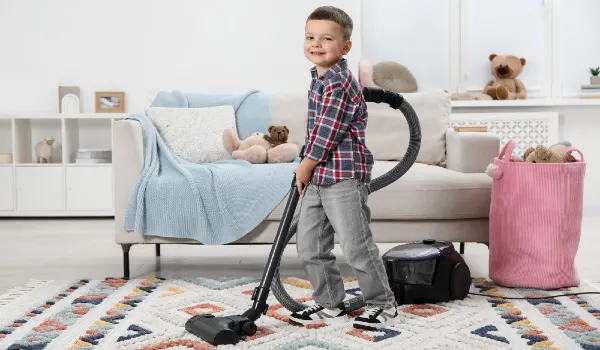
Consistency plays a huge role in building habits. Instead of asking your child to clean randomly, assign a specific time each day or week for tidying up. It could be before bedtime, after playtime, or during the weekend.
When cleaning becomes part of their routine, it feels less like an interruption and more like a normal part of their day. Over time, they’ll begin to do it automatically without you having to remind them constantly. This habit building approach is especially helpful when preparing for bigger tasks like bond cleaning Sunshine Coast, where regular upkeep makes the final clean much easier.
4. Model the Habit of Keeping Spaces Clean
Children learn more from what you do than what you say. If they see you maintaining a clean and organised space, they are more likely to follow suit. Show them how you tidy up your own belongings and involve them in small household tasks.
You can also turn it into a shared activity. Cleaning together not only makes the task quicker but also creates a sense of teamwork. It shows your child that cleaning isn’t a punishment, it’s a responsibility everyone shares in the household.
5. Use Positive Reinforcement to Encourage Cleaning
Appreciation goes a long way in shaping behaviour. Instead of focusing on what your child hasn’t done, acknowledge their efforts when they do clean up even if it’s not perfect. A simple “Great job organising your toys!” can boost their confidence and motivation.
You can also introduce a reward system, like earning stickers or points that lead to a small treat. The goal isn’t to bribe, but to reinforce the idea that their effort is valued. Over time, this positive association encourages them, to take initiative without needing constant reminders.
6. Give Kids Ownership of Their Room’s Cleanliness
Kids are more likely to care about their room when they feel a sense of ownership. Let them make small decisions about how their room looks, whether it’s choosing colours, arranging furniture, or organising their toys in a way they like.
When children feel that their room truly belongs to them, they naturally want to keep it tidy. It also teaches responsibility and independence, helping them understand that maintaining their space is part of growing up.
7. Set Age Appropriate Room Cleaning Expectations
Expecting a perfectly spotless room from a young child can lead to frustration for both of you. Instead, set age appropriate goals. Younger kids can focus on picking up toys and putting things in the right place while older children can handle more detailed tasks like organising shelves or folding clothes.
Keeping expectations realistic ensures that your child doesn’t feel overwhelmed or discouraged. It also makes the process smoother and more sustainable in the long run, especially when you need a more thorough clean for occasions like bond cleaning Sunshine Coast.
Infographic: How To Get Kids To Clean Their Room?
Wrapping Up
Encouraging kids to clean their room without nagging isn’t about forcing them; it’s about guiding them. With patience and the right strategies, your child will not only learn to keep their room tidy but also develop a sense of responsibility that stays with them for life. And when bigger cleaning tasks come along, you’ll be glad those habits are already in place.