



How to Clean Painted Walls Without Causing Any Damage?
Key Takeaways
- Check the paint type before starting the cleaning process.
- Remove dust from painted walls before using water or cleaning solutions.
- Choose gentle cleaning solutions that are safe for painted surfaces.
- Remove stains and scuff marks without scrubbing the paint.
- Control the amount of water used while cleaning painted walls.
- Inspect painted walls carefully before moving out.
Painted walls can collect dust, fingerprints, stains and scuff marks as part of everyday life. Although regular cleaning helps keep walls looking fresh; using the wrong products or scrubbing too hard can damage the paint. Excessive water, harsh chemicals and abrasive tools may leave behind faded areas, peeling paint or uneven patches.
Cleaning painted walls safely is especially important when preparing a rental property for a final inspection. A careful approach can remove everyday dirt while protecting the existing paintwork. This article will let you know how to clean painted walls without causing any damage. Whether you are cleaning the property yourself or hiring professional bond cleaning Sunshine Coast services; knowing the right method can help you achieve cleaner walls without causing unnecessary damage.
- Check the Paint Type Before Cleaning Painted Walls
- Remove Dust Before Cleaning Painted Walls
- Use Gentle Cleaning Solutions for Painted Walls
- Remove Stains and Scuff Marks Without Damaging Paint
- Control Water When Cleaning Painted Walls
- Inspect Painted Walls Before Moving Out
- Simple Tips for Protecting Painted Walls
- Infographic: Painted Walls Cleaning Tips
- Wrapping Up
- Frequently Asked Questions
1. Check the Paint Type Before Cleaning Painted Walls
Before cleaning your walls, check the type and condition of the paint. Matte and flat finishes are usually more delicate and may become patchy if they are scrubbed too much. Satin, eggshell and semi gloss finishes are generally more resistant to gentle cleaning. If you are unsure about the finish, it is always safer to start with the mildest cleaning method.
Testing your cleaning method first can also prevent accidental damage. Choose a small area that is not easily visible, such as behind furniture and apply a small amount of your cleaning solution. Let it dry completely and check for changes in colour, texture or shine. If everything looks normal, you can proceed with cleaning the rest of the wall.
2. Remove Dust Before Cleaning Painted Walls
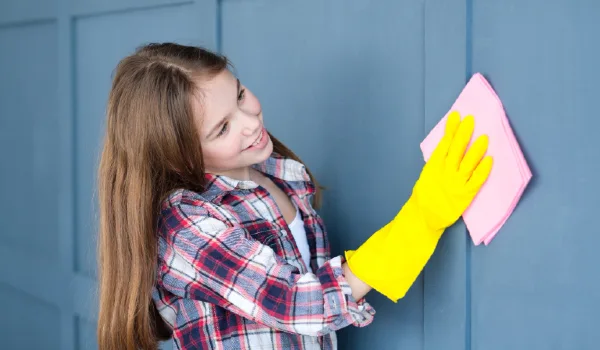
Loose dust should be removed before you introduce any water or cleaning solution. If you wipe a dusty wall with a wet cloth, the dust can turn into a dirty film and spread across the surface. This can make the wall harder to clean and may require more rubbing, increasing the risk of damaging the paint.
Use a clean microfiber cloth, soft duster, or soft brush to remove the dust. Start from the top of the wall and work your way down so that loose particles fall onto areas that have not yet been cleaned. Pay particular attention to corners, edges, areas around light switches, and spaces near the ceiling.
3. Use Gentle Cleaning Solutions for Painted Walls
Most painted walls do not require strong cleaning chemicals. A simple mixture of warm water and a small amount of mild dishwashing liquid can be enough, to remove fingerprints, light dirt and everyday marks. A soft microfiber cloth or non abrasive sponge is also preferable to rough cleaning materials.
Avoid using bleach, abrasive powders, strong solvents, or rough scrubbers unless they are specifically recommended for your type of paint. These products can affect the colour or finish of the wall. Always wring out your cloth properly before cleaning because it should be damp rather than soaking wet.
4. Remove Stains and Scuff Marks Without Damaging Paint
Some parts of the home naturally collect more marks than others. Hallways, doorways, children’s rooms and areas around light switches can develop fingerprints and scuffs through regular use. While these marks may require a little extra attention; applying too much pressure can remove paint along with the dirt.
Use a damp microfiber cloth and gently wipe the affected area, using small circular movements. If the mark remains then repeat the process, instead of immediately scrubbing harder. For stubborn stains; test your cleaning solution on an inconspicuous area first. This helps you determine whether the product is safe before applying it to a more visible section.
5. Control Water When Cleaning Painted Walls
Too much water can cause problems when cleaning painted walls. Excess moisture can seep into small cracks, affect certain paint finishes and leave streaks or water marks. Older walls and walls with existing damage can be particularly sensitive, so it is better to clean gradually rather than soaking the surface.
Clean one small section at a time and make sure your cloth is thoroughly wrung out before wiping. Once you have finished a section, use a clean, dry microfiber cloth to remove excess moisture. Good ventilation can also speed up the drying process, so open windows or doors where possible.
6. Inspect Painted Walls Before Moving Out
If you are cleaning a rental property for a bond cleaning inspection, give extra attention to areas that are frequently touched. Walls near switches, doorways, corridors, staircases, and furniture can develop marks that may not be obvious during everyday living. Once the property is empty, these imperfections can become easier to notice.
After cleaning, inspect the walls under natural or bright lighting. Look for fingerprints, streaks, missed stains and areas that may need another gentle wipe. If you are arranging bond cleaning Sunshine Coast, pointing out specific marks to the cleaning team can also help ensure that these areas receive appropriate attention without unnecessary scrubbing.
7. Simple Tips for Protecting Painted Walls
A few basic habits can make wall cleaning safer and reduce the chance of damaging the paint. You do not need expensive equipment or complicated products. The most important thing is, to work gently and give the cleaning solution enough time to loosen dirt.
Keep these simple points in mind:
- Always test a cleaning solution on a hidden area first.
- Use soft microfiber cloths instead of abrasive cleaning pads.
- Avoid soaking the wall with water.
- Do not scrub stubborn marks aggressively.
- Allow the wall to dry properly after cleaning.
Following these steps can help you maintain painted walls during regular cleaning and when preparing a property for inspection.
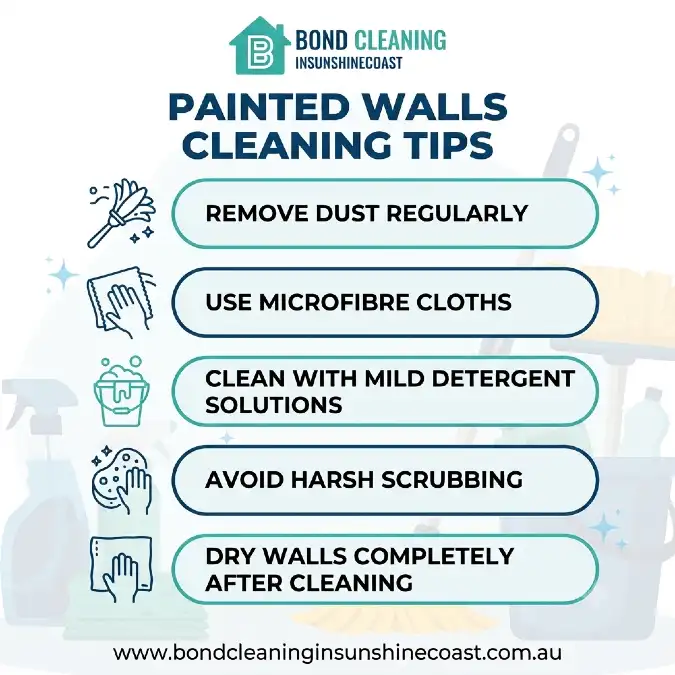
Infographic: Painted Walls Cleaning Tips
Wrapping Up
Cleaning painted walls safely is mainly about using the right technique rather than relying on strong cleaning products. For tenants preparing a rental property for a final inspection; clean walls can improve the overall appearance of the home. Taking a little extra care can help remove visible marks while protecting the existing paint. With patience and the right approach, painted walls can be cleaned effectively without causing unnecessary damage.
Frequently Asked Questions
Q1. What is the safest way to clean painted walls?
Use a soft microfiber cloth with mild soapy water and avoid excessive pressure, harsh chemicals and abrasive cleaning tools.
Q2. Can I use dish soap to clean painted walls?
Yes, a small amount of mild dish soap mixed with warm water can safely remove light dirt, fingerprints, and everyday marks.
Q3. How can I remove scuff marks from painted walls?
Gently wipe scuff marks with a damp microfiber cloth using small circular movements instead of scrubbing aggressively.
Q4. Can too much water damage painted walls?
Yes, excess water can leave marks, affect certain paint finishes or seep into cracks, so always use a well wrung damp cloth.
Q5. Should I clean painted walls before a rental inspection?
Yes, cleaning visible dust, stains, fingerprints, and scuff marks can make the property look cleaner and better maintained.