



What Does Fair Wear and Tear Mean In Sunshine Coast Rentals?
Renting a property comes with responsibilities for both tenants and landlords. One of the most common points of confusion at the end of a lease is the difference between fair wear and tear and tenant caused damage. Understanding this distinction can help avoid disputes and improve your chances of receiving your full bond refund.
In Sunshine Coast rentals, some deterioration is expected as a property ages through normal use. This article will let you know what fair wear and tear means in rentals. Knowing what is considered acceptable allows tenants to care for the property properly and prepare for a smooth move out, especially when arranging top quality bond cleaning Sunshine Coast services.
- What is Fair Wear and Tear?
- Common Examples of Fair Wear and Tear in Rental Homes
- What Counts as Tenant Damage?
- How to Protect Your Rental Bond?
- Communicating with Your Landlord
- Keep Records Throughout the Tenancy
- Why Does the Entry Condition Report Matter?
- Preparing for the Final Rental Inspection
- Infographic: Understanding Fair Wear and Tear in Rentals
- Wrapping Up
1. What is Fair Wear and Tear?
Fair wear and tear refers to the natural deterioration that occurs when a property is lived in over time. Even if tenants maintain the home well, everyday use will gradually affect surfaces, fixtures, and fittings. This type of aging is generally expected in any rental property.
Typical examples include faded paint, carpets that have flattened in high traffic areas, and loose cupboard handles caused by regular use. These issues occur naturally and are different from damage resulting from negligence, accidents or improper care.
2. Common Examples of Fair Wear and Tear in Rental Homes
The Sunshine Coast’s warm climate and strong sunlight can contribute to gradual wear inside rental properties. Curtains, flooring and painted walls may fade over time; while regular foot traffic can leave light marks on carpets and timber floors. These changes are usually considered normal.
Other examples include minor scuff marks on walls, worn door handles and small cracks that develop as a building settles. Completing a detailed entry condition report helps distinguish between existing wear and any issues that develop during the tenancy.
3. What Counts as Tenant Damage?

Tenant damage occurs when parts of the property are harmed through misuse, carelessness or neglect rather than ordinary living. Unlike fair wear and tear, these issues are usually preventable and may result in repair costs being deducted from the rental bond.
Examples include broken windows, holes in walls, large carpet stains, damaged benchtops, or broken fixtures. If accidental damage occurs, reporting it promptly and arranging repairs where necessary can help minimise further problems before the final inspection.
4. How to Protect Your Rental Bond?
Looking after the property throughout your tenancy is one of the best ways to protect your bond. Regular cleaning, proper ventilation, and reporting maintenance issues early can prevent minor problems from becoming more expensive repairs later.
Before moving out, compare the property’s condition with the original entry report and address any cleaning requirements. Hiring professionals who provide top quality bond cleaning Sunshine Coast services can also help ensure the property meets inspection standards.
5. Communicating with Your Landlord
Good communication with your landlord or property manager, can prevent misunderstandings during your tenancy. Reporting maintenance issues as soon as they arise demonstrates that you are taking reasonable care of the property and helps avoid further damage.
If you are unsure, whether something is considered fair wear and tear or tenant damage, discuss it before the final inspection. Keeping written records of maintenance requests and responses also provides useful evidence if questions arise later.
6. Keep Records Throughout the Tenancy
Take photographs of every room when you move in and keep them alongside your signed entry condition report. Throughout your tenancy; save copies of repair requests, inspection reports, invoices, and any communication with your landlord or property manager.
These records provide valuable evidence; if there is ever a disagreement about the property’s condition. Combined with routine maintenance and bond cleaning services before moving out; thorough documentation can support a smoother bond refund process.
7. Why Does the Entry Condition Report Matter?
The entry condition report is one of the most important documents during a tenancy. It records the property’s condition before you move in and serves as a point of comparison during the final inspection. Carefully reviewing this report and noting any existing marks or damage, helps ensure you are not held responsible for pre existing issues.
Supporting the report with dated photographs provides even stronger evidence, if a dispute arises. Taking the time to complete this step thoroughly can make the bond claim process much smoother. It also gives both tenants and landlords a clear understanding of the property’s original condition.
8. Preparing for the Final Rental Inspection
The final inspection is your opportunity to demonstrate that the property has been well maintained throughout the tenancy. Before handing over the keys, check each room carefully, remove all personal belongings and ensure appliances, cupboards, bathrooms, and outdoor areas are clean and tidy.
It is also a good idea to compare the property with the original entry report and address any minor maintenance tasks before the inspection. Combining these preparations with top quality bond cleaning Sunshine Coast services can help present the property at its best and reduce the likelihood of unnecessary bond deductions.
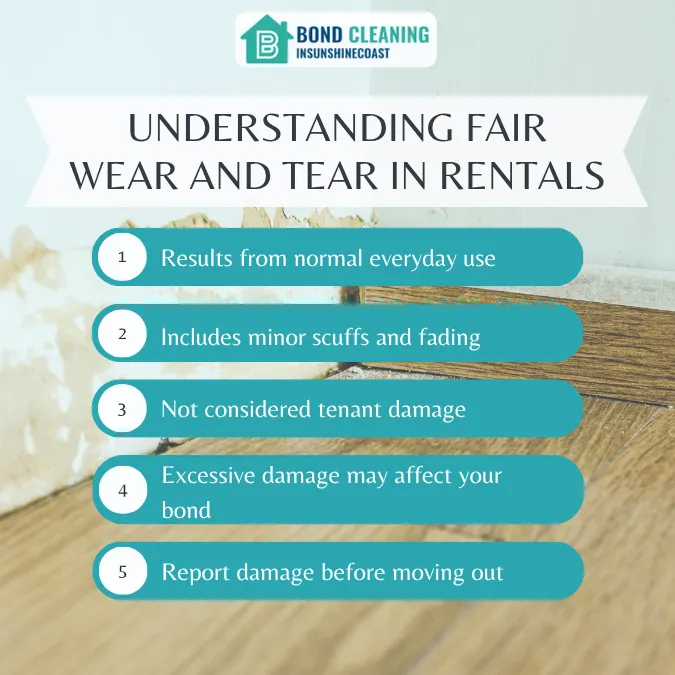
Infographic: Understanding Fair Wear and Tear in Rentals
Wrapping Up
Understanding the difference between fair wear and tear and tenant caused damage helps create realistic expectations for both tenants and landlords. It also reduces the likelihood of disputes during the final inspection. By maintaining the property, keeping accurate records, communicating openly, and arranging bond cleaning services before moving out, tenants can leave the property in excellent condition and improve their chances of receiving their full bond back.