


How Often Should An Office Space Be Cleaned?
Maintaining a tidy workspace isn’t just about visual appearance; it’s about promoting the good health of your team, maintaining your company’s reputation and boosting the overall productivity of employees. The process may involve eliminating dirt, grime, grease and stubborn stains from surfaces, but the impact is huge and consistent. A healthy, hygienic and productive work environment delivers exceptional results while reducing sick leaves.
However, if your concern is how often your office should be cleaned to maintain its pristine look and feel, read the following guide and make an informed decision. According to professional bond cleaners Sunshine Coast, the frequency of cleaning depends on the size of your workspace, usage and industry standards. In this guide, we’ll break down cleaning frequencies for your office. This will help you create a more structured daily, weekly, and monthly office cleaning schedule tailored to your specific needs.
Let’s Get Started!
- The Importance of a Clean Office
- What are the Most Recommended Cleaning Frequencies?
- How often should a large sized office be cleaned?
- How frequently should a small office be cleaned?
- Key Indicators that your office needs more frequent cleaning
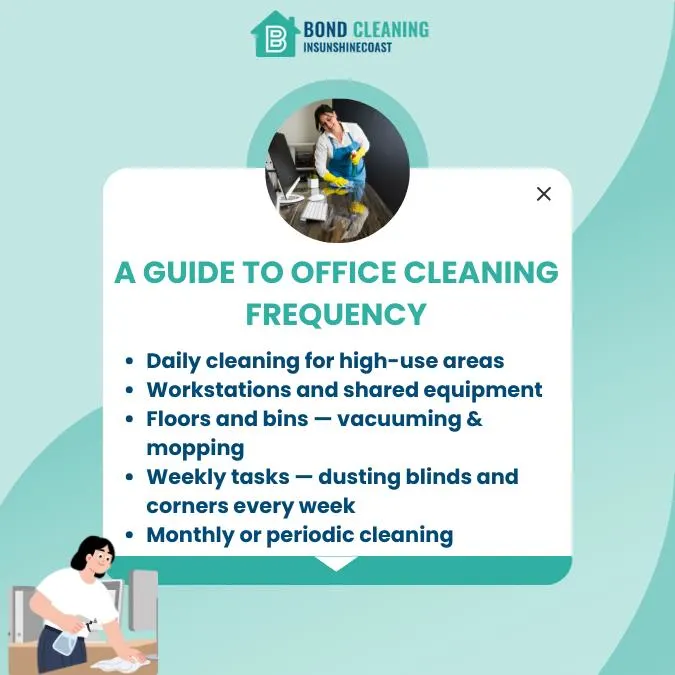
- Infographic: A Guide To Office Cleaning Frequency
- Wrapping Up
1. The Importance of a Clean Office
First things first! Everyone should understand the importance of maintaining the highest hygiene standards in an office. Regular dusting, stain scrubbing, and sanitisation help create a better place to work and deliver exceptional results. Even research shows that a tidy and organised space boosts focus, alleviates stress and helps teams stay productive and efficient.
Moreover, meticulous commercial spaces, be it big or small, can help reduce sick leave via better sanitisation. It also supports compliance with Safe Work Australia hygiene standards while boosting the company’s culture. It is more than a service you outsource; it is an investment in your brand.
2. What are the Most Recommended Cleaning Frequencies?
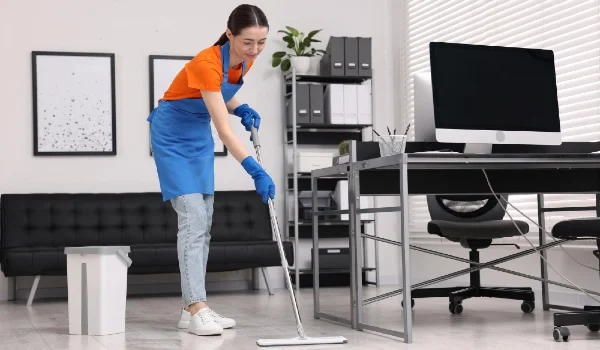 While the ideal frequencies vary for each commercial space, here are some of the most common recommendations:
- Daily Cleaning: Dislodge dirt, grime, stains and germs from restrooms, reception areas, workstations and other shared spaces. It helps you maintain the highest hygiene standards while preventing dust and dirt accumulation.
- Weekly Cleaning: A more thorough sprucing can be performed to spot and remove accumulated dirt and grime from nooks and crannies. This includes vacuuming and cleaning carpets and upholstery, mopping floors, cleaning windows, emptying and disinfecting recycling bins, and cleaning shared spaces.
- Monthly or Bi Monthly Cleaning: This comprises deeper cleaning tasks, such as carpet steam cleaning, mould removal, floor waxing, cleaning and replacing HVAC filters, etc. This can be scheduled on a monthly or bi monthly basis to ensure the office remains clean and furniture intact for years.
- One Time Cleaning: When moving out of your rental office space, you need a professional bond cleaning Sunshine Coast service to meet lease specific requirements. This includes a proper checklist to help you cover every nook and cranny with precision.
3. How often should a large sized office be cleaned?
If you have a large commercial space with more than 50 employees, you’ll need to get it cleaned daily. The main objective is to remove everyday dust, dirt, germs, and splatters to create a spotless, hygienic work environment. The focus should be on high traffic areas, such as reception area, workstations, shared spaces, etc as these areas see rapid accumulation of dirt and germs.
Daily cleaning reduces potential health risks while ensuring a presentable workspace for employees, clients and visitors alike. You may also consider the following routine depending on the size, layout and usage of your space:
- Weekly floor polishing and thorough vacuuming of carpeted areas
- Monthly air vent cleaning, window cleaning, etc.
Encourage your employees to maintain a tidy workstation and keep allergens and germs at bay.
4. How frequently should a small office be cleaned?
A workspace with fewer than 20 employees may not need daily cleaning, but scheduling sessions two to three times per week can make a world of difference. Even with limited staff, hygiene and a positive work environment matter. It is essential to focus on workstations, carpets, the pantry, and other key hotspots where germs can thrive and spread, posing potential health hazards.
Routine cleaning in a small office space should focus on tidying up workspaces, disinfecting door handles, computer systems, light switches, workstations, tables, chairs, and bathrooms.
However, if you are at the end of your tenancy, book experts for a quality bond cleaning Sunshine Coast and secure your hard earned rental bond without any dispute.
5. Key Indicators that your office needs more frequent cleaning
If you encounter any of the following, ensure you increase the cleaning frequency to maintain a tidy workspace:
- Visible grime and gunk: Overflowing trash, cluttered shared spaces and dusty windows are obvious signs that your office needs frequent cleaning.
- Bad Smells: Persistent smell indicates poor hygiene and the presence of mould and mildew. Make sure you address these issues promptly.
- Employee Complaints: If your team is complaining about the cleanliness issues, take their feedback and spruce up the space properly.
- Increased Sick Leaves: Higher sick days of each employee are connected to an unclean environment. Make sure you increase the efficiency to make the most of your routine.
It is good to conduct thorough research and hire the best office cleaning Sunshine Coast service for daily, weekly, and monthly sessions. They will help you maintain a tidy space.
Infographic: A Guide To Office Cleaning Frequency
Wrapping Up
Knowing the most suitable cleaning frequency for your office space can help you maintain a healthy, hygienic and productive work environment. Whether it is a large or a small space, ensure you understand your specific requirements and create a customised schedule to keep germs and grime at bay.